
Disinfectants are added during treatment
Chlorine is used to control microorganisms and maintain a disinfectant residual while water moves through the supply network. That residual is why chlorine can still be present when water reaches the tap.
A SHORT GUIDE TO CARBON FILTERS
Activated carbon adds another filtration step between the refill point and you — reducing chlorine and specific trace compounds before you drink, while also improving taste and odour.
WHAT CAN REMAIN AFTER TREATMENT
Treated drinking water isn't chemically pure. Chlorine is deliberately used during disinfection, and a residual can remain as water moves through the supply network. Other trace compounds can enter the water cycle before treatment or later through infrastructure and plumbing.
Point-of-use filtration adds one final step immediately before you drink.
WHERE IT FITS INTO YOUR DAY
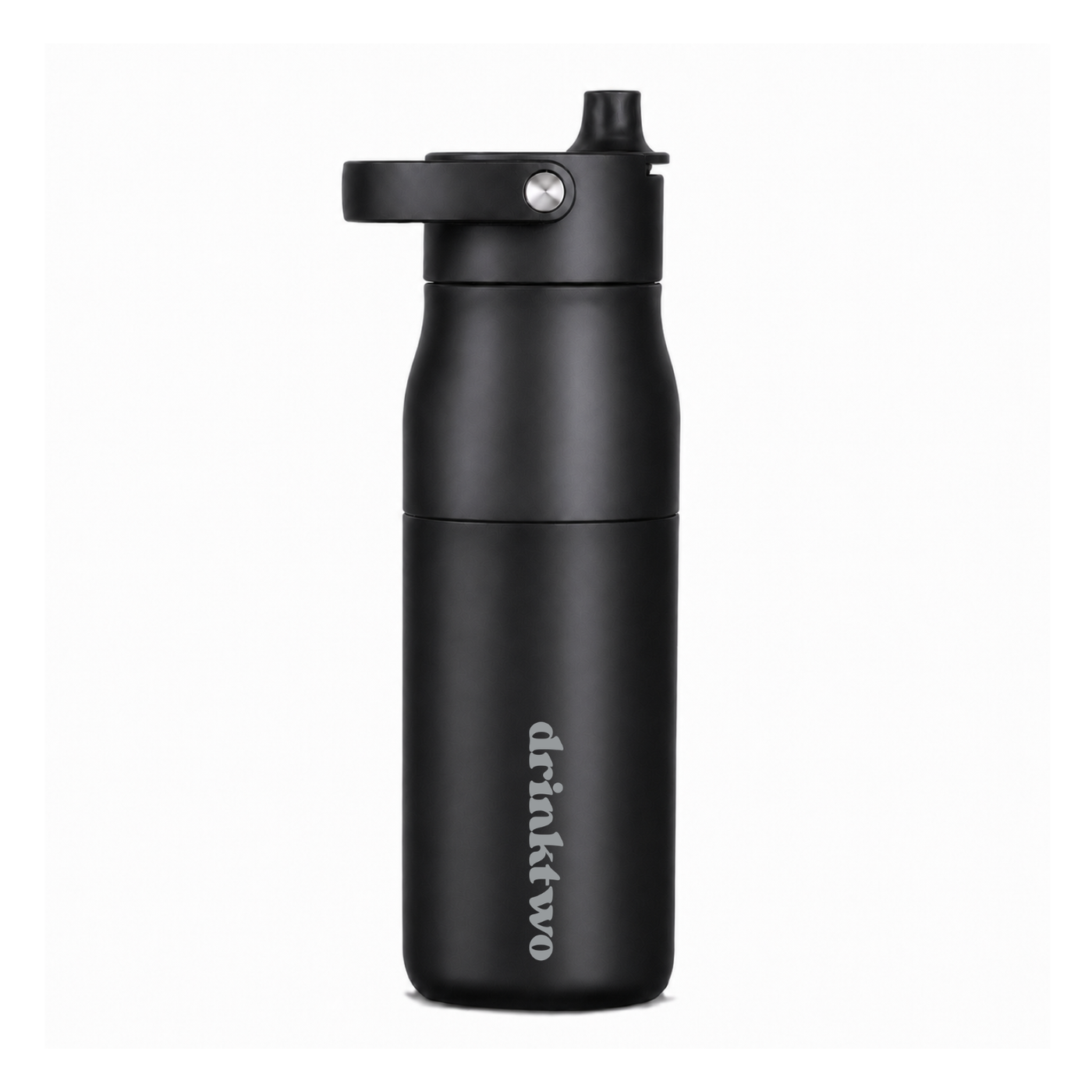
Potable simply means suitable for drinking. drinktwo is designed for the taps and refill stations you already use — at home, work, uni, the gym or while you're out.
Fill as normal. Water passes through the carbon filter on the way to the straw, so the filtration happens as you drink.
One clear boundary: drinktwo is a point-of-use filter for potable water. It is not an emergency purifier for untreated water.
HOW CARBON FILTERING WORKS
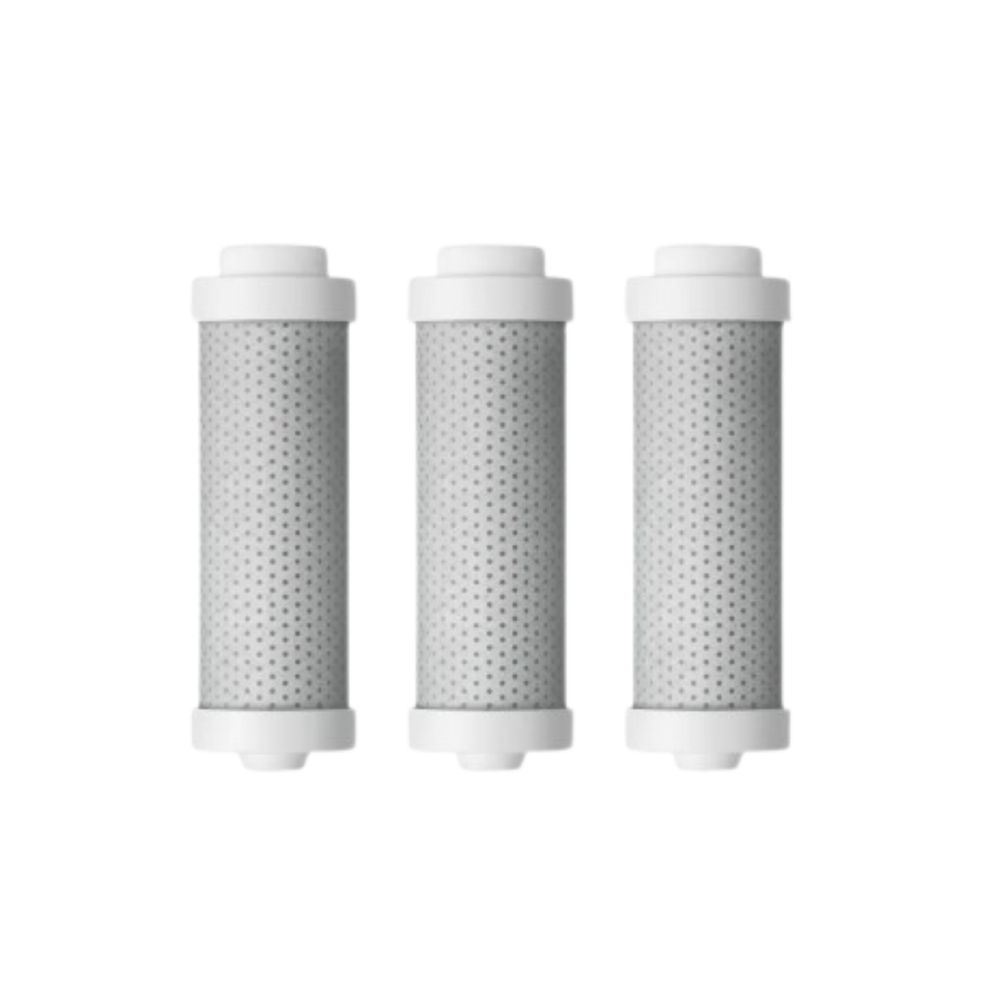
Activated carbon is processed to create a huge network of microscopic pores. Those pores give a small cartridge an enormous internal surface area for water to move across.
As water passes through, certain dissolved compounds interact with the carbon surface and are held there. This is called adsorption. Chlorine is also reduced through reactions at the carbon surface. The result is filtration happening inside the bottle while you drink.
SEE THE PROCESS
Chlorine has already done an important job by the time it reaches your bottle: helping disinfect the water supply. Activated carbon is widely used to reduce free chlorine and taste-and-odour compounds, so the final filtration step happens immediately before you drink.
HOW IT GETS THERE
Compounds can reach drinking water at different points in its journey. Some are added during treatment, some begin in the wider environment, and others can enter after treatment through plumbing. Water suppliers manage and monitor these pathways; point-of-use filtration sits at the very end.
Chlorine is used to control microorganisms and maintain a disinfectant residual while water moves through the supply network. That residual is why chlorine can still be present when water reaches the tap.
Water sources interact with the wider environment before treatment. Manufactured chemicals such as PFAS, agricultural chemicals and trace residues from everyday activity can enter the water cycle and become part of what water suppliers monitor and manage.
Treated water still travels through mains, building pipes, fittings and taps. Some substances, including certain metals, can enter water from plumbing materials after treatment.
Activated carbon works through adsorption: dissolved compounds are attracted to and held within its highly porous surface as water passes through. Different compounds interact with carbon differently, but this technology is widely used in drinking-water treatment for taste, odour and a range of organic contaminants.
Activated carbon is widely used to reduce free chlorine in drinking water. Reducing chlorine can also lessen the chemical taste and smell it leaves behind, giving water a cleaner, fresher taste.
Activated carbon is used in water treatment to reduce many PFAS compounds. It generally performs better with longer-chain PFAS such as PFOA and PFOS, while shorter-chain compounds can be more difficult for carbon to capture.
Volatile organic compounds, or VOCs, are a group of carbon-based chemicals that can enter water from industrial, household and environmental sources. Activated carbon can adsorb many of these compounds onto its large internal surface as water passes through.
Agricultural chemicals can make their way into water through runoff from farms, gardens and surrounding land. Activated carbon is widely used to adsorb many organic pesticide and herbicide compounds, helping reduce the amount that remains in treated water.
Medicines don’t always disappear after they’re used — trace pharmaceutical compounds can pass into waterways through wastewater. Activated carbon is widely used to capture many of these organic compounds, helping reduce the residues that remain in treated water.
“Emerging compounds” refers to trace chemicals that are increasingly being detected and studied in water, including some pharmaceuticals, industrial chemicals and personal-care compounds. Activated carbon is used to reduce a range of these organic substances as water moves across its porous surface.
WHY IT’S USEFUL
The filter gives everyday water another step before you drink it, reducing the specific substances it has been tested to target.
Activated carbon reduces chlorine and taste-and-odour compounds, helping each refill taste and smell cleaner.
No separate jug and no waiting. Fill from a potable source and the filtration happens as you drink.
THE CLEAR LIMIT
No single water filter removes everything — and a good filter should not pretend to. drinktwo is made for potable drinking water and targets specific substances through point-of-use carbon filtration. Its performance is defined by what the filter has actually been tested to reduce, not by a vague claim to “purify” everything in your water. Replace the cartridge at its rated capacity and use it with potable water.